












Cargo stuck at the Iran border is one of the most expensive problems in China–Iran road freight — and one of the most avoidable. Shippers usually blame trucking capacity or port congestion, but the numbers say otherwise: more than 90% of detained shipments we see trace back to incorrect, inconsistent or incomplete customs documents. A mismatched invoice and packing list. A wrong UN number on a chemicals load. A Certificate of Origin applied for two days after the truck already left. Any of these can park your cargo at Khorgos or an Iran border terminal for days or weeks, running up demurrage, storage charges and official customs penalties.
So here is the checklist we actually use. We have split it into three segments — pre-shipment verification, China export declaration, and Iran import clearance — because that is how the paperwork is really reviewed: three separate gates, each with its own rules and its own responsible party.
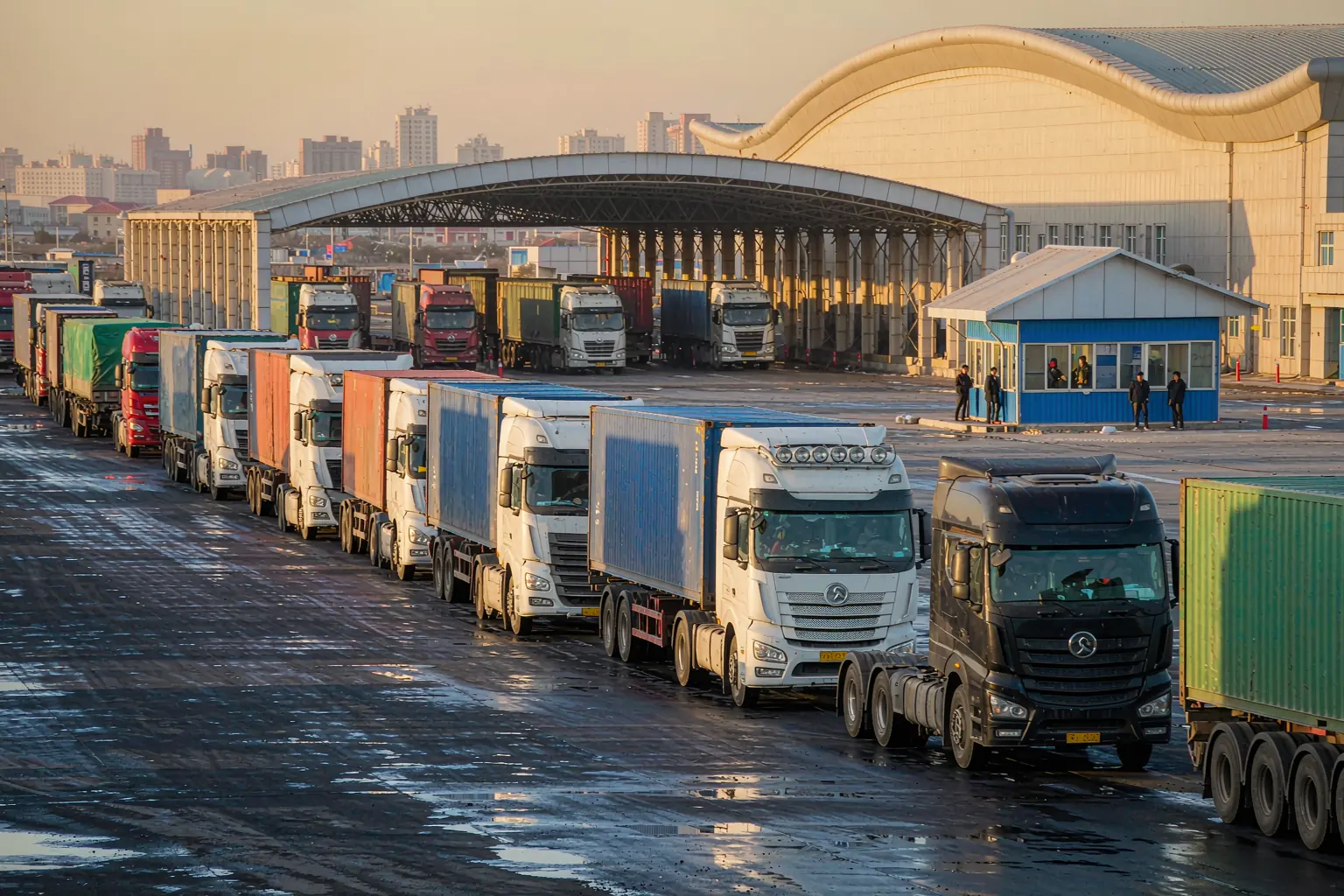
1. Three Document Segments, Three Responsible Parties
A full China to Iran trucking move passes through three independent document reviews. Documents that clear one gate can still fail the next, so it pays to know who owns each stage.
| Segment | What it covers | Responsible party |
|---|---|---|
| Transportation documents | Trucking eligibility, cargo loading basis, route arrangement | Shipper provides; Cargo Solid Logistics audits and double-checks |
| China export declaration | Outbound clearance at Khorgos (or another exit port) | Shipper or authorized customs broker; we coordinate |
| Iran import clearance | Inbound clearance and final delivery in Iran | Iranian consignee or licensed local Iran customs agent; we supply the transport documents |
One thing worth being clear about: our land freight service fully manages the China–Iran road transportation itself. Iran import clearance is handled independently by the Iranian consignee and their local agent — that is how the market works. What we do is make sure their side never has an excuse to hold the cargo: every transport document arrives complete, consistent and on time.
2. Pre-Shipment Checklist: Verify Before the Truck Moves
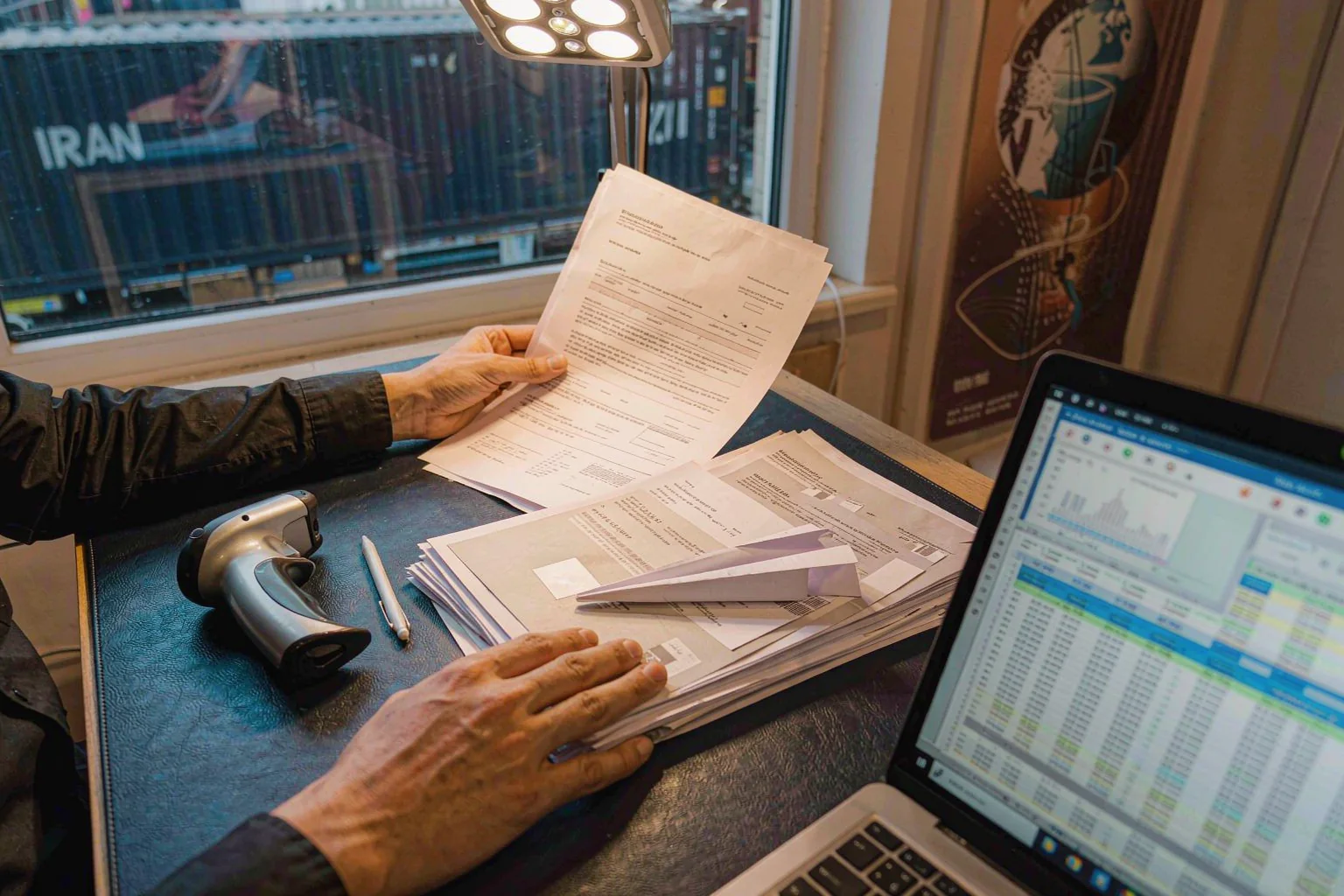
Once a booking is confirmed, our operations team runs an item-by-item audit. The rule is simple and non-negotiable: document data must match the actual cargo. Thirty minutes of checking before departure avoids days of document revision, supplementation and re-declaration after arrival.
Basic documents for every Iran shipment:
- Commercial invoice — complete cargo name, specifications, quantity, unit price and total value. Everything must match the actual goods and satisfy both China export and Iran import declaration standards.
- Packing list — total package count, gross weight, net weight and volume, fully consistent with the piece/gross/volume data submitted at booking.
- Proforma invoice / sales contract — used at booking stage to verify trade terms, working alongside the commercial invoice for the formal export declaration.
Extra documents for chemicals and dangerous goods:
- MSDS certificate — complete composition, physical properties and hazard description, matching the actual goods.
- UN number and DG classification — the official UN code and hazard class, consistent with the declared cargo name and customs commodity classification.
- Dangerous goods packaging certificate — valid packaging inspection certification, with the packaging grade matching the hazard classification.
If anything does not line up, we fix and re-verify before loading. That one habit eliminates the overwhelming majority of dangerous-goods detention risk at Khorgos and on the Iran side. For a deeper treatment of DG rules across transport modes, see our dangerous goods shipping guide.
3. China Export Customs Declaration Documents
China outbound clearance for Iran-bound road freight is filed by the shipper or an authorized customs broker. We recommend brokers who work the Khorgos lane regularly, and we handle the document docking so nothing bounces between parties. For general cargo you will need:
- Customs declaration power of attorney — the official authorization file if a broker files on your behalf.
- Commercial invoice, packing list and complete declaration elements — the same audited set from pre-shipment, in final form.
- Customs declaration draft — providing an accurate HS code in advance speeds up Khorgos clearance dramatically.
For dangerous goods exports, the Dangerous Goods Classification Appraisal Report is legally required on top of the above. Exact standards follow the latest regulations of the departure customs port, which is why we confirm them per shipment rather than quoting a static list.
4. Iran Import Clearance Checklist (Consignee Side)
This is the stage that decides your final delivery timeline, and it runs on the Iranian consignee or their licensed local agent. Our job is to hand them a complete, consistent document set so clearance moves without queries:
| Document | Purpose | Watch-out |
|---|---|---|
| CMR international road waybill | Core transport document, issued by us, travels with the truck for border inspection | Must reflect the actual loading and route |
| Commercial invoice & packing list | Iran import declaration basis | Data must match the China export declaration exactly |
| Certificate of Origin (CO) | Proves origin; eligible goods can claim Iranian tariff preferences | Apply early — late CO applications are a classic detention cause |
| Inspection & quarantine certificate | Per cargo category and current Iranian supervision rules | Requirements differ by product; confirm per shipment |
| Dangerous goods import permit | Mandatory pre-approval for all DG entering Iran | Must be fully approved before the truck reaches the border |
A practical tip we give every shipper: before departure, have the Iranian consignee confirm current document requirements with their local agent. Different product categories face different supervision policies, and Iranian customs updates them more often than most. Missing one document can mean detention plus daily storage, demurrage and fines. If your cargo also moves into Uzbekistan or Afghanistan, our Iran–Uzbekistan–Afghanistan import certification comparison breaks down how the three regimes differ.
5. The Three Errors That Detain Most Cargo
From years of running this lane, nearly every detention story we hear comes down to one of three mistakes — all avoidable at the audit stage.
5.1 Mismatched invoice and packing list. Product name, specification, quantity, weight or unit price differing between the two files triggers rejection on both sides — China export customs and Iran import customs — and the cargo sits at the border while corrected documents are reissued and re-declared.
5.2 DG declaration inconsistent with the MSDS. A UN number or hazard class on the declaration that does not match the official MSDS fails shipment approval outright. The truck does not even get a graceful delay — it gets held at the departure port.
5.3 Late Iran import permit processing. If the Iranian importer has not finished DG import permit approval before the cargo reaches the border, detention is immediate, and the meter starts running: daily storage, demurrage, and official customs fines.
6. Transit Times With Clean Documents
With a complete, consistent, fully compliant document set, China–Iran road freight runs on a stable cycle:
| Leg | Working days |
|---|---|
| Domestic pickup to Khorgos border port | 5–7 working days |
| Khorgos clearance to Iran destination, door-to-door | 18–22 working days |
Document verification is the cheapest optimization available on this lane — no premium trucks, no special routing, just paperwork that survives scrutiny. For routing background, our analysis of TIR trucking as the stable China–Iran option explains why road freight has held up when ocean rates went wild, and the eTIR paperless rollout shows where border formalities are heading next.
7. Let Us Audit Your Documents Before They Become a Problem
Most Iran shipping delays and surprise costs trace back to a pre-shipment document error that took five minutes to make and weeks to fix. We treat document auditing as a core step, not an afterthought — every Iran-bound file set gets checked item by item before anything is loaded.
If you are unsure what your cargo needs, send us the product name, HS code and cargo specifications. You get a free customs compliance assessment, a customized document checklist, and a tailored China–Iran door-to-door logistics plan. For freight quotes, truck booking and precise lead times, message our team — we reply with a concrete plan, not a brochure. You can also start from the China to Iran shipping country guide for routing and rate context.
Related Reading
- Shipping from China to Iran — Country Guide
- Hormuz Strait Closure: Why TIR Trucking Is the Most Stable China–Iran Shipping Option in 2026
- Iran, Uzbekistan, Afghanistan Import Compliance Comparison
- Dangerous Goods Shipping from China: IMDG, IATA and Lithium Batteries Explained
- New TIR Trucking Routes From China: Shenyang and Suifenhe
Request a Quote
Tell us your cargo type, volume and destination. Our freight team replies with a routing plan and a firm transit quote.