












Persistent Hormuz Strait closures, surging ocean freight rates, and overloaded China–Iran railway routes have reshaped Sino–Iranian supply chains throughout 2026. With traditional sea and rail shipping channels facing frequent delays, limited capacity, and rising geopolitical risks, TIR trucking services have emerged as one of the most stable and predictable alternatives for businesses shipping cargo from China to Iran. This blog breaks down the current logistics challenges and why cross–border road freight has become a reliable solution for time–sensitive industrial and commercial shipments.
1. The 2026 Hormuz Strait Shutdown: A Critical Supply Chain Breakpoint
On February 28, 2026, Iran officially implemented strict vessel traffic restrictions on the Hormuz Strait, a world–class maritime choke point that handles 20% of global oil transportation and massive general cargo shipping volumes. Before the Hormuz Strait shutdown, more than 130 cargo vessels passed through the strait every day. However, daily vessel traffic has now dropped to single digits, with maritime trade nearly suspended during peak restriction periods, creating a nationwide logistics deadlock for Iran import and export trade.
This unprecedented maritime blockade has formed a critical supply chain bottleneck for Chinese exporters and Iranian importers. While continuously rising freight rates bring direct financial pressure on trading companies, the core and more destructive operational risk lies in uncontrollable transit times and disrupted industrial production schedules. These unstable logistics conditions trigger cascading economic losses for manufacturing factories and trading enterprises across China and Iran.
2. High-Priority Cargoes Driving Urgent China–Iran Shipping Demand
Iran’s domestic industrial system is highly reliant on imported Chinese industrial equipment, mechanical intermediate components, and bulk building commodities. Unlike ordinary consumer goods, these core industrial cargoes feature high timeliness requirements and zero tolerance for long logistics delays, directly supporting Iran’s key industrial and infrastructure operations:
- Petrochemical project equipment: Reactors, compressors, industrial steel pipes and core processing equipment required for ongoing petrochemical infrastructure projects. Delays lead to full project suspension and daily penalty losses.
- Automotive spare parts: Major Iranian automakers including IKCO and SAIPA rely entirely on Chinese component supplies to maintain production lines. Logistics stagnation directly causes factory shutdowns.
- Construction & building materials: Tiles, sanitary ware, steel and basic construction materials that support Iran’s domestic infrastructure and retail inventory replenishment, with strict seasonal sales and construction windows.
- Electronic & chemical raw materials: Precision electronic components and industrial chemicals for local manufacturing, which determine the normal operation of downstream electronics and chemical enterprises.
For engineering project contractors, industrial equipment suppliers and manufacturing enterprises, waiting 3–4 weeks for fully booked China–Iran rail freight or taking risks on delayed, uncertain sea freight is completely commercially unsustainable. Under this high–risk 2026 Sino–Iran logistics environment, a fast, stable, and high–consistency China to Iran shipping channel has become an essential logistics guarantee for enterprises of all scales.
3. Why Traditional China–Iran Shipping Channels Fail in 2026
3.1 Ocean Freight: Expensive and Unpredictable
Before the Hormuz Strait traffic ban, most China–Iran sea freight shipments passed through the Red Sea and Persian Gulf waterways. After the official closure, all cargo vessels are forced to take the long detour via the Cape of Good Hope, extending the overall transit time by 15 to 20 days. Meanwhile, the comprehensive shipping cost for a 40GP standard container from China to Iran has skyrocketed from several thousand US dollars to nearly $10,000, bringing huge cost pressure for cross–border traders.
Beyond soaring basic freight fees, war risk insurance premiums have surged explosively as a hidden cost. Cargo war insurance rates have jumped from 0.3% of the total cargo value to a maximum of 5%, while vessel war risk premiums can exceed 7.5% under extreme geopolitical situations. All these additional logistics surcharges are ultimately passed on to shippers, further raising the cost of China–Iran ocean freight.
Frequent port congestion, emergency port diversion adjustments, and repeated transit holdups have made ocean freight delivery times completely unpredictable. For manufacturing and trading enterprises that implement strict weekly production and just–in–time delivery systems, such uncontrollable logistics risks are fatal and will directly lead to production stagnation and order default losses.
3.2 China–Iran Railway Freight: Fully Booked and Slow
Once recognized as the most reliable land freight alternative to sea freight, traditional China–Iran railway freight has fallen into full capacity saturation in 2026. The rapid growth of cross–border cargo volume passing through Central Asian border countries has completely overloaded the existing railway transit capacity, resulting in serious resource shortages.
Currently, shippers need to book China–Iran rail container spaces 3 to 4 weeks in advance. Limited cargo handling and clearance capacity at key border ports in Kazakhstan and Turkmenistan causes long–term transit congestion, adding an extra 1 to 2 weeks of unplanned delays. For time–sensitive industrial cargoes, project equipment and urgent spare parts, rail freight can no longer meet strict fast shipping requirements.
4. TIR Trucking: The Stable China–Iran Land Freight Solution
With both sea freight and rail freight corridors under severe operational pressure, TIR cross–border trucking services have become the optimal overflow and priority shipping solution for urgent China to Iran cargoes. Governed by the unified international TIR road transport convention, China–Iran TIR trucking is a mature, stable, and verified long–haul cross–border land freight solution with years of successful operational experience.
The biggest competitive advantage of this TIR trucking route is clear and unique: it adopts a full closed–loop overland corridor to completely bypass the high–risk Hormuz Strait and Red Sea maritime zones, avoiding all geopolitical shipping risks and maritime congestion problems.
4.1 Exclusive Stable Route by Cargo Solid Logistics
Cargo Solid Logistics operates a streamlined, low–risk overland corridor between China and Iran, designed to minimize transit uncertainties and bypass volatile maritime zones. The fixed route delivers consistent lead times with fewer transfer points compared to conventional rail and sea alternatives:
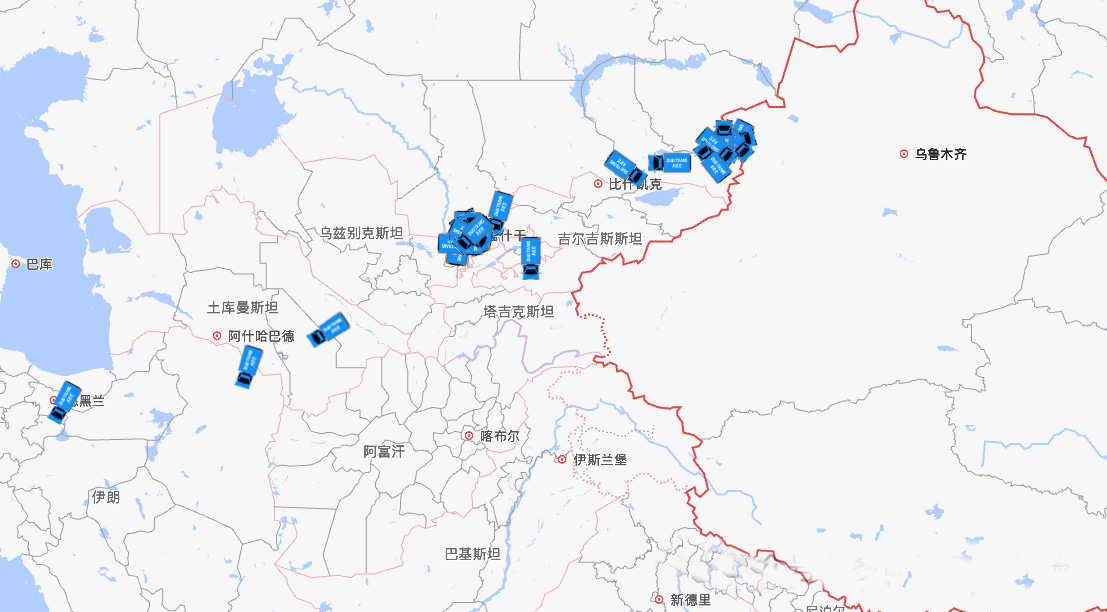
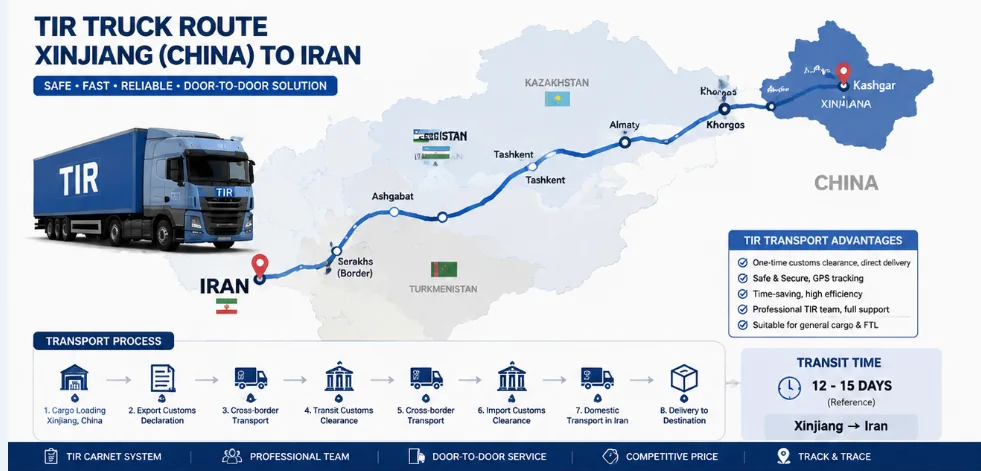
China domestic pickup → Khorgos Border Exit → Kazakhstan → Uzbekistan → Turkmenistan → Lotfabad Border (Iran) → Iran inland destination delivery
As a core strategic border checkpoint connecting Turkmenistan and northeastern Iran, Lotfabad Port supports a nearly straight–line land transit route starting from Xinjiang Khorgos. This optimized route effectively reduces detour distances, simplifies intermediate cargo handling and transfer procedures, and directly delivers goods to Iran’s inland core industrial and commercial zones, maximizing overall logistics efficiency.
Because the corridor transits Uzbekistan, shippers should also review our Uzbekistan road transport regulations 2026 guide for the key trucking compliance rules applicable along the route.
5. Core Advantages of China–Iran TIR Trucking by Cargo Solid Logistics
5.1 Full Truck Load (FTL) for Heavy & Project Cargoes
FTL (Full Truck Load) trucking is ideal for heavy machinery, oversized project cargo, and large–volume industrial shipments. With door–to–door direct transportation and no intermediate cargo handling, the service reduces damage risks and maintains stable scheduling for high–value equipment such as industrial reactors, production machinery, and automation systems.
5.2 Less Than Truck Load (LTL) Cost–Effective Shipping
LTL (Less Than Truck Load) consolidation offers a cost–efficient option for small–batch, multi–cycle shipments. By combining multiple consignments into one full truck, businesses can access stable China–Iran land freight without covering full vehicle capacity, making cross–border logistics more flexible for SMEs and regular trade shipments.
5.3 Real–Time GPS Cargo Tracking & Full Transparency
Real–time GPS tracking enables full in–transit visibility for all road freight shipments. Shippers can monitor vehicle locations, border clearance status, and estimated arrival times throughout the journey, eliminating the unpredictability that often affects sea and rail transit across Central Asia and the Middle East.
5.4 Compliant Dangerous Goods Transportation
Licensed and ADR–compliant trucking solutions support the safe transportation of chemicals, lithium batteries, energy storage units, and other regulated goods. This fills a critical gap in traditional shipping channels, which often impose strict restrictions or lengthy clearance procedures for special cargo moving between China and Iran. Importers should also prepare documents in advance using our Iran import certification comparison as a compliance reference.
6. Target Clients & Shipping Timeline
This China–Iran TIR trucking model is best suited for engineering contractors, industrial equipment exporters, automotive component suppliers, electronics manufacturers, and building material traders that require consistent lead times and reliable cross–border transit.
| Shipping Mode | Transit Time (2026) | Stability | Key Constraint |
|---|---|---|---|
| Ocean (detoured) | 35–45+ days | Low | Cape of Good Hope detour; war–risk insurance up to 5% |
| China–Iran Railway | 4–6+ weeks (book 3–4 wks ahead) | Low | Fully booked; KZ/TM border congestion |
| TIR Trucking | 12 days port–to–port; 15–18 days door–to–door | High | Fixed overland route bypassing Hormuz & Red Sea |
With weekly scheduled departures and adjustable capacity, TIR road freight delivers predictable lead times of 12 days port–to–port and 15–18 days door–to–door. Compared with detoured ocean freight and backlogged rail services, land trucking provides a far more stable timeline for production planning and order fulfillment.
7. Conclusion: TIR Trucking Is the Safest Hedge Against Sino–Iran Logistics Risks
As Hormuz Strait instability continues to disrupt global maritime logistics in 2026, businesses shipping to Iran are shifting toward more resilient overland routes. While ocean freight faces high premiums and uncertain ETA and rail freight struggles with limited booking slots and border congestion, TIR trucking offers a flexible, fast, and reliable alternative for urgent, oversized, and regulated cargoes.
For modern supply chain managers, TIR road freight is no longer a contingency solution — it has become a core reliable channel to stabilize China–Iran shipping schedules and avoid production delays caused by geopolitical transit disruptions.
Cargo Solid Logistics provides reliable China–to–Iran overland freight solutions, including domestic pickup, cross–border TIR transit, and border delivery support for enterprise shipments of all sizes.
Related Reading
- Uzbekistan New Road Transport Regulations 2026: 4 Important Rules for China–Uzbekistan Trucking
- Iran, Uzbekistan, Afghanistan Import Compliance Comparison: Key Certification Requirements You Must Know
- Shipping from China to Uzbekistan | Complete Freight Guide
- Uzbekistan E–commerce Logistics Complete Guide 2026
Request a China–Iran TIR Trucking Quote
Tell us your cargo type, volume, and destination in Iran. Our freight team responds with a stable overland routing plan and transit quote.