












Two announcements from northern China this month deserve more attention than they got. On 19 August, Shenyang opened two new TIR trucking routes in a single day — one to Azerbaijan via Kazakhstan and a Caspian ferry, one to Russia via Mongolia. Six days later, Suifenhe on the Russian border launched a consolidation centre combining TIR trucking with cross-border e-commerce. Neither is a symbolic pilot; both carry real freight on real schedules.
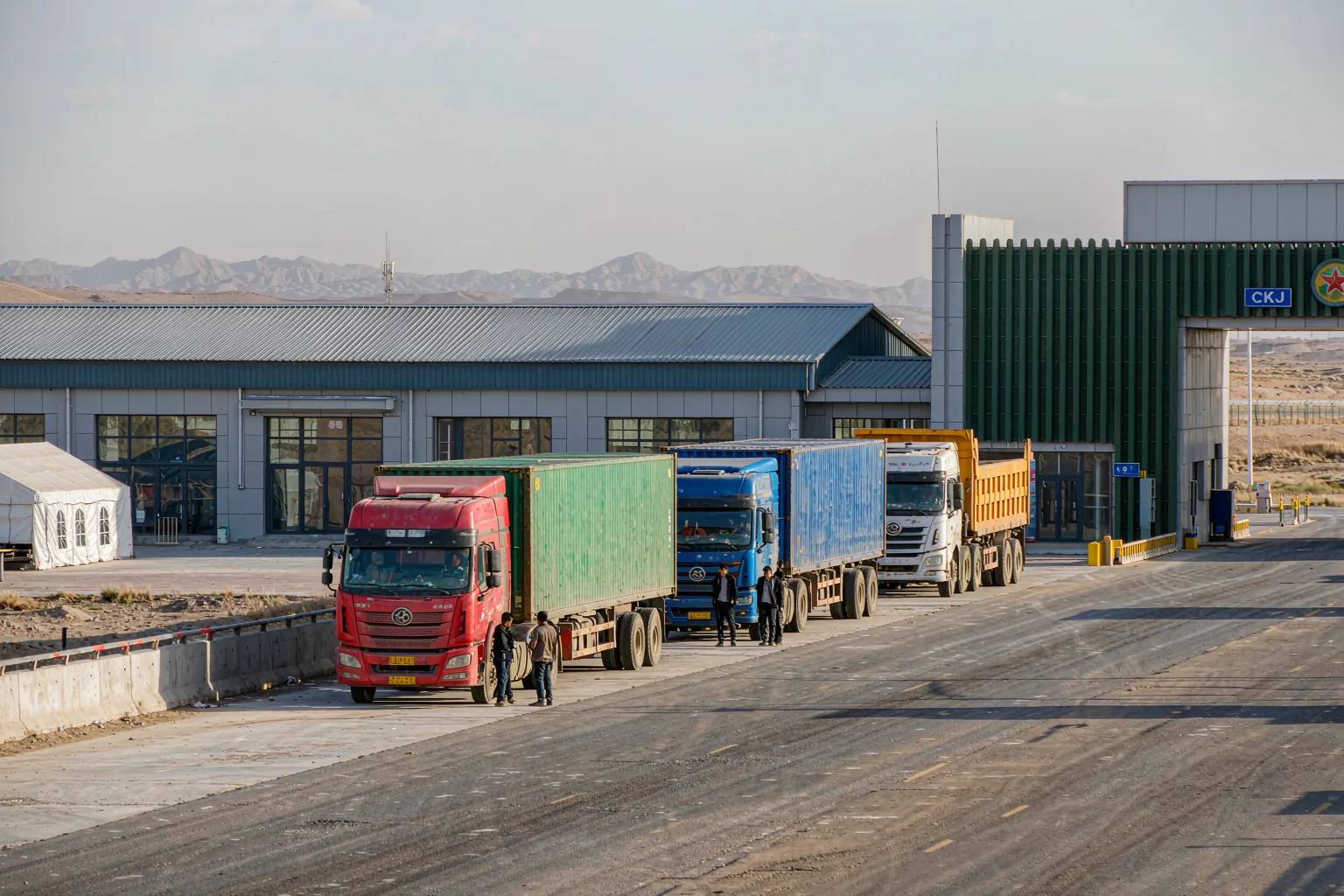
1. Shenyang to Baku: Truck + Ferry in About 13 Days
The more interesting of the two Shenyang routes left on 19 August carrying frozen food products. It runs west through China, exits at the Baketu crossing in Xinjiang, crosses Kazakhstan, and finishes with a Caspian ferry crossing to Baku — around 13 days door to door. Compared with the traditional all-road routing, the truck-plus-ferry combination cuts roughly 2,000 km, and operators on the route report overall logistics cost reductions in the region of 30%. For cold chain cargo, days saved are risk avoided; every extra day in transit is a day your reefer unit can fail.
2. Shenyang to Russia: The Mongolia Shortcut
The same day, four TIR trucks loaded with auto parts departed Shenyang heading for Russia via the Erenhot crossing and Mongolia. The driver of the lead vehicle put it plainly: most runs to Russia used to go via Manzhouli, and the Mongolia transit cuts about 1,000 km. On a lane where drivers are paid by the kilometre and borders charge by the hour, that is a direct saving — and it pairs road freight with the same middle-channel corridor the rail side is scaling (see our Erenhot rail analysis).
3. Suifenhe: TIR Meets Cross-Border E-Commerce
On 25 August, ten TIR trucks loaded with garments, general merchandise and auto parts left Suifenhe’s new international trade transport consolidation centre, bound for Moscow and further into Europe. The interesting part is the model: the centre combines the 9610 e-commerce inspection area with TIR pre-clearance, so cargo is consolidated, sorted, and customs-cleared in one closed loop. The operator reports clearance times two to three days shorter than traditional cross-border transport.
The backing numbers explain the urgency. Suifenhe’s trade with Russia reached 19.9 billion yuan in the first seven months of 2026, up 42.2%, and trucked export cargo through the highway port hit 776,000 tonnes, up 23% — both records. The city has cultivated 39 cross-border transport companies, five of them TIR-certified with 263 vehicles. That is a real freight cluster, not a border town with a slogan.
4. What TIR Actually Saves You
It helps to be precise about why TIR trucking works. A TIR vehicle travels under customs seal with a single international carnet. In principle, customs in transit countries do not unload or inspect the cargo; duties are covered by an international guarantee chain. No transloading at borders, no repeated national declarations, no deposits en route. On a corridor with four or five border crossings, that is days of dwell time removed — which is exactly what the Suifenhe and Shenyang numbers reflect.
| Factor | TIR trucking | Rail | Sea |
|---|---|---|---|
| Transit China→Central Asia/Russia | 8–15 days typical | 12–18 days | 35–45 days |
| Flexibility (dates, origin, destination) | High — door to door | Scheduled trains, terminal to terminal | Fixed sailings, port to port |
| Best cargo | E-commerce, parts, cold chain, urgent lots | Full containers, steady volumes | Large, heavy, non-urgent volumes |
| Cost per kg | Higher | Middle | Lowest |
If you are weighing TIR trucking for Iran lanes specifically, our analysis of TIR as the stable China–Iran option under the Hormuz disruptions goes deeper on that corridor. And if you ship into Uzbekistan, note that new road transport regulations affect trucking operations there — worth a read before you commit.
5. Who Should Consider Switching
- E-commerce sellers replenishing Russian and Central Asian marketplaces — the Suifenhe model is built for you.
- Cold chain shippers — the Shenyang–Baku ferry route removes roughly 2,000 km of road and about 30% of cost.
- Manufacturers shipping spare parts — auto parts are literally the cargo these routes launched with.
- Anyone priced out of air freight but burned by 40-day sea transits — TIR sits in the middle on both speed and price.
Not every lane fits. Very heavy project cargo still belongs on rail or sea, and destinations deep in Europe are often better served by rail to a hub plus final-mile trucking. But the direction of travel is clear: road freight from China is becoming a scheduled, documented product with its own hub network, and August added two serious nodes to it.
Related Reading
- Hormuz Closure: Why TIR Trucking Is the Best China–Iran Shipping Option in 2026
- Uzbekistan New Road Transport Regulations 2026
- Land Transport & Cross-Border Road Freight Services
- Shipping from China to Russia — Country Guide
Request a Quote
Tell us your cargo type, volume and destination. Our freight team replies with a routing plan and a firm transit quote.