












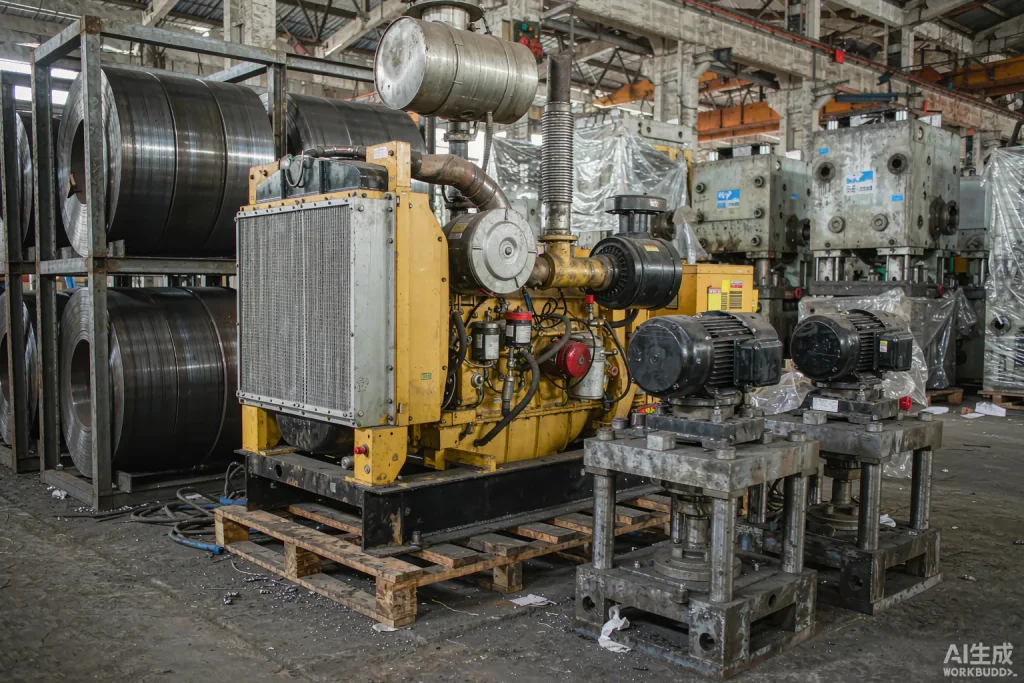
China is one of the largest machinery exporters to Cuba, supplying generator sets, bus and truck chassis, food-processing lines, agricultural equipment, construction machines and full industrial plants. Shipping machinery from China to Cuba, however, is a different problem from a standard 20ft container of consumer goods. Cargo weight, dimensions, lifting points, lashing and value-at-risk all change the routing decision — and most liner carriers serving Cuba either refuse out-of-gauge (OOG) cargo or quote punitive rates.
CargoSolid Logistics ships machinery to Cuba on a regular basis. This guide walks through the four practical routing options, the documentation you need, and how to keep your cargo moving even when Cuba-bound vessels are full or restricted.
Looking for the full lane overview first? See our Shipping from China to Cuba hub page. For rate reference numbers, see How Much Does It Cost to Ship from China to Cuba.
What Counts as “Machinery” on the China-Cuba Lane
In practice we see four machinery profiles that each require a different handling plan:
- Self-propelled vehicles on wheels: buses, truck chassis, mini excavators, forklift trucks, agricultural tractors — usually roll-on/roll-off or drive-on/drive-off onto a break-bulk vessel deck.
- Generator sets and skid-mounted equipment: diesel generator sets, compressor skids, water-treatment skids, complete pump stations — typically 1-15 tons per unit, fit into 20ft SOC containers or stowed on deck.
- Production lines and assembly plants: food-processing lines, brick-making plants, packaging lines, complete garment factories — usually split into multiple SOC containers or shipped as a project cargo.
- Heavy-lift and out-of-gauge units: industrial boilers, large transformers, mining equipment, crane components, port machinery — typically 20-200 tons per piece, stowed on deck with special lashings.
Why Liner Carriers Struggle with China-Cuba Machinery
Most international liner services treat OOG machinery as a low-priority commodity, and on the Cuba lane the situation is harder. Carriers face three structural problems:
- Limited OOG slots. Cell guides on container vessels constrain piece dimensions to roughly 12 m × 2.4 m × 2.6 m. Anything heavier or larger needs a flat rack — and carrier-owned flat racks bound for Cuba are scarce.
- Heavy-lift cranes are rare. Conventional liner terminals at Cuban discharge ports were not designed for 100-ton unit lifts, so carriers impose weight limits that exclude a lot of genuine machinery.
- Commodity restrictions. Several liner services apply extra commodity screening to Cuba-bound cargo. Used vehicles, generator sets and certain machinery categories are either refused or pushed to lower-priority bookings.
This is exactly the gap our SOC break-bulk service is designed for. Because the containers are owned by the Chinese ship-owner and the vessels are dedicated, we can take pieces most liner services turn down.
Routing Option 1 — SOC Break-Bulk (Default for Most Machinery)
For most machinery categories — generator sets, skid equipment, full production lines, vehicles, smaller OOG units — SOC break-bulk on a Chinese-operated vessel is the most cost-effective option. SOC containers are loaded at your factory or at a nearby container yard, sealed in China and stowed on a dedicated break-bulk vessel that sails directly to Cuba.
- Typical transit: 35-50 days port-to-port from Shenzhen, Ningbo, Shanghai, Qingdao, Xiamen or Tianjin to Mariel.
- Best for: buses, trucks, cars, generator sets, skid-mounted equipment, full container loads of machinery.
- Constraints: SOC containers are 20GP / 40GP / 40HQ — for pieces above ~28 tons or wider/taller than container dimensions, see Option 3.
How it works in practice: we confirm your machinery specs, verify HS-codes against China export controls, supply SOC containers at your loading site, handle Chinese export clearance, stow the SOC boxes together with any deck cargo on the next break-bulk sailing, and discharge at Mariel, Havana or Santiago de Cuba for your receiving entity.
Routing Option 2 — Flat Rack / Open-Top Container (When Liner Slots Are Available)
If the machinery fits within flat-rack dimensions (typically up to 12 m × 2.4 m and up to ~30 tons) and you can secure a carrier-owned flat rack, we will book it on a liner vessel to Cuba. This is faster in some windows but exposed to the carrier’s Cuba commodity restrictions — many flat racks bound for Cuba are refused at booking stage, especially for used vehicles, generator sets and certain machinery classes.
- Typical transit: 30-45 days port-to-port via transshipment hubs.
- Best for: new machinery under 30 tons, fits within flat-rack dimensions, HS-code is acceptable to the carrier.
- Watch out for: carrier-imposed Cuba commodity restrictions and limited flat-rack availability.
Routing Option 3 — Heavy-Lift & Out-of-Gauge on Break-Bulk Deck
For heavy machinery that exceeds SOC or flat-rack dimensions — large boilers, mining equipment, transformers, port cranes, complete production lines — we stow the units directly on the break-bulk vessel’s weather deck. Each unit is secured with custom lashings calculated for the ocean voyage.
- Typical piece weight: 20-200 tons per unit, occasionally higher.
- Best for: heavy-lift and OOG industrial machinery.
- Documentation: detailed unit dimensions, center-of-gravity, lifting points and lashing plan must be submitted at least 14 days before vessel loading.
Heavier pieces share the sailing with SOC containers below deck, which is why the SOC break-bulk model can absorb heavy-lift in the same schedule.
Routing Option 4 — Air Freight (Urgent or High-Value Spares)
For urgent spare parts, prototype machinery or high-value small units (typically under 200 kg per piece), air freight to Havana’s José Martí International Airport is the fastest option. Transit is 6-12 days, but cost is roughly $6-$10 per kg reference range, so air is reserved for genuine urgency.
How to Prepare Machinery for China-Cuba Shipping
Machinery breaks in transit when preparation is skipped. A consistent prep checklist shortens loading time and reduces the risk of damage claims:
- Drain fluids. fuel tanks, hydraulic oil, coolant — most carriers and Cuban authorities require fuel tanks empty or near-empty.
- Disconnect batteries. required for any unit shipped on a vessel with battery-powered starters.
- Secure moving parts. booms, buckets, booms, conveyor belts, articulated arms — lash or block to prevent swing.
- Protect lifting and tie-down points. mark them clearly for the stevedore; this speeds up loading and reduces forklift damage.
- Photograph the unit from all four sides plus serial plate before sealing. Photographs are the basis of any damage claim.
- Provide accurate dimensions and weight including any protrusions. A 10% mis-declaration is enough to invalidate lashing calculations.
Documentation Checklist for Machinery to Cuba
- Commercial invoice and packing list (HS-code, unit value, total value).
- China export declaration and customs clearance documents.
- Bill of lading issued by the vessel operator.
- Certificate of origin (Form E or general CO depending on commodity).
- For used machinery: prior-use declaration, year of manufacture, hours of operation.
- Cuban import permit or import license held by the receiving entity (the consignee-side entity is responsible for this — CargoSolid Logistics coordinates the document pre-alert).
If you are unsure how to handle the Cuban import license or INC classification for a specific machinery category, our Cuba Import Customs Guide walks through the receiving-entity process and the documents Cuban authorities typically request.
Frequently Asked Questions
Do you ship used vehicles and used machinery to Cuba?
Yes, on our SOC break-bulk vessels. Used buses, trucks, mini excavators, generator sets and second-hand production lines are stowed together with new cargo. We require a prior-use declaration (year, hours, working condition) and check HS-codes against China export controls and Cuban import rules before booking.
What is the maximum machinery weight you can ship to Cuba?
On the SOC break-bulk model we regularly handle single pieces up to about 200 tons on the vessel’s weather deck. For heavier units (above 200 tons) we evaluate each project individually and may use a different vessel class. Send your unit specs and we will confirm feasibility and a reference quote within one business day.
How is heavy machinery lashed on the break-bulk vessel?
Each heavy unit is lashed with a project-specific securing plan: steel lashings, chains and timber blocking sized to the unit’s weight, center of gravity and sea conditions. The plan is shared with the customer for confirmation before the vessel sails. Photo records of lashings are kept on board and on shore.
Can I ship a complete production line in one booking?
Yes. Production lines are typically split into multiple SOC containers plus, if needed, deck-loaded heavy-lift units on the same sailing. We coordinate the loading plan so the line arrives at the Cuban destination in the same shipment window, ready for sequential installation.
Is insurance required for machinery shipments to Cuba?
Insurance is not mandatory but strongly recommended for machinery, especially for high-value or used units. CargoSolid Logistics can arrange all-risk marine cargo insurance covering the ocean leg; inland legs on either side are covered by separate policies if needed.
Which Cuban port should I discharge machinery at?
Mariel Port is the most-recommended destination for machinery — it has deeper water, modern container and break-bulk handling, and shorter road access to Havana and the western provinces. Santiago de Cuba is used for eastern-Cuba deliveries. Havana Port handles regular commercial cargo but has older infrastructure.
How far in advance should I book machinery shipping to Cuba?
For SOC break-bulk: at least 3-4 weeks in advance so your cargo can be consolidated onto the next break-bulk sailing and any deck stowage planned. For heavy-lift (Option 3): at least 4-6 weeks in advance to allow the lashing plan and stowage drawing to be prepared.
Get a Quotation for Machinery Shipping to Cuba
Send us your machinery specs — commodity description, HS-code, unit dimensions, weight, quantity, China loading port and Cuban destination — and we will reply with a routing proposal and reference quote within one business day. For heavier or more complex pieces, our project-cargo team can also scope a multi-modal plan combining SOC containers, deck-loaded heavy-lift and inland haulage.
Request a quote via our contact page or WhatsApp. If you would like to read the broader Cuba lane overview first, see Shipping from China to Cuba.