












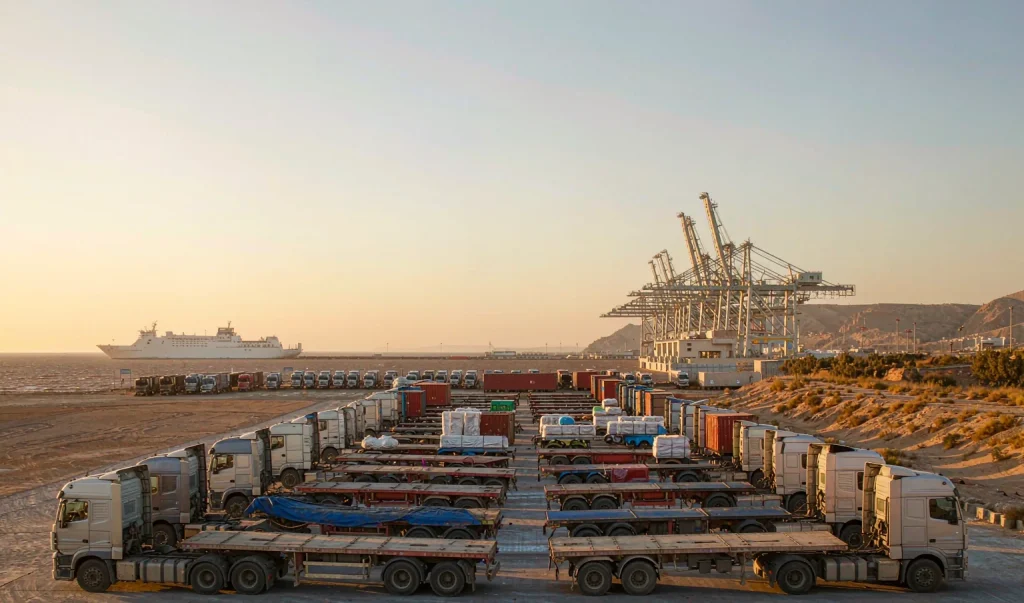
Turkmenistan is the Central Asian market where paperwork, not distance, decides whether cargo arrives on time – and in 2026 both sides of that equation moved at once. Four Central Asian states have now completed their digital interconnection to the UN’s eTIR transit system, a highway programme has more than halved the run from the Caspian coast to the Uzbek border, and the Farap checkpoint has doubled its capacity. For importers moving machinery or consumer goods to Ashgabat, Turkmenabat or Turkmenbashi, the routing options are better than a year ago. The customs file has not changed at all, and that is where first shipments stall.
Where Turkmenistan Sits in Your Supply Chain
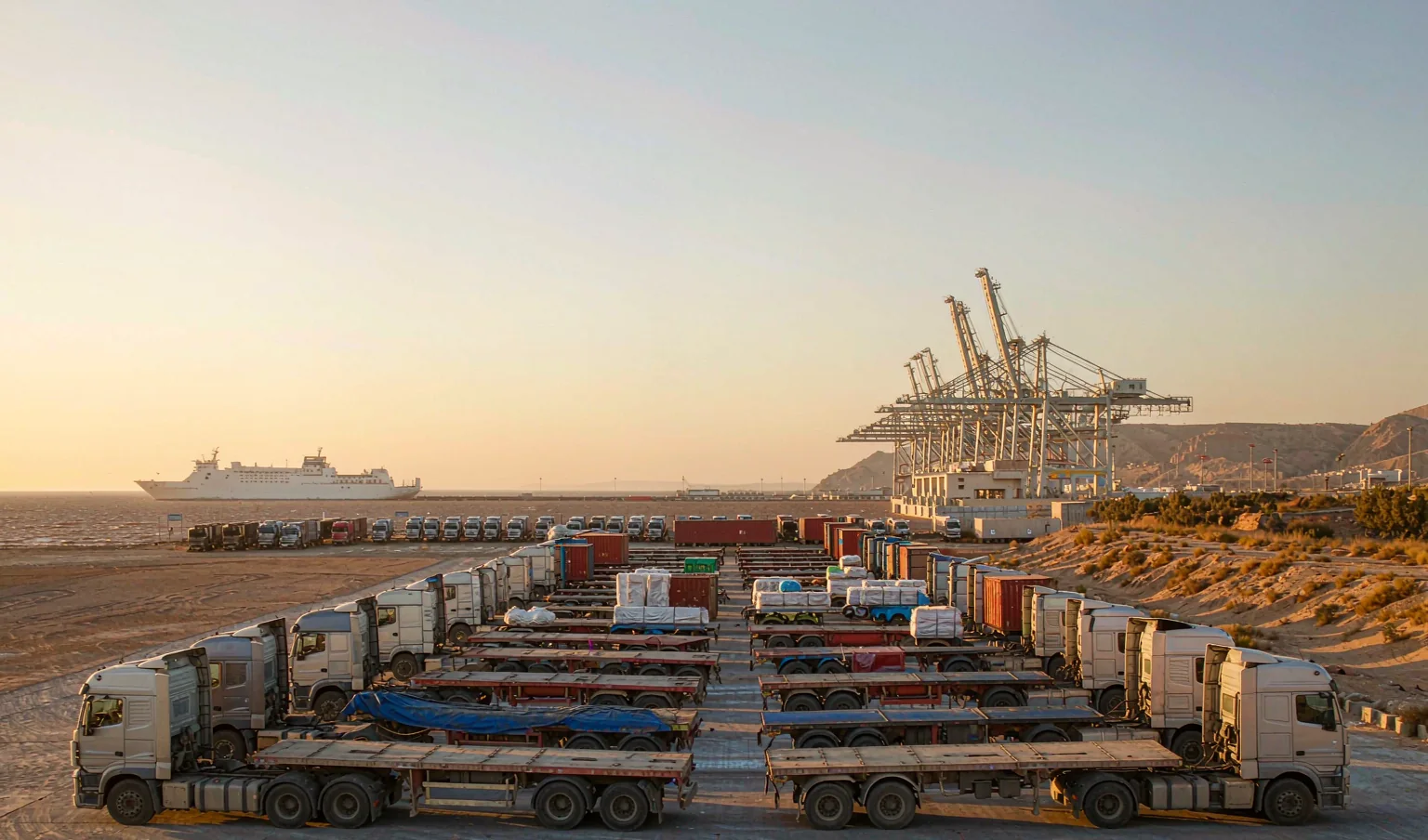
Landlocked and bordered by Kazakhstan, Uzbekistan, Afghanistan and Iran, Turkmenistan does two jobs at once. It is a destination market where state-led construction, energy and textile programmes pull in equipment and industrial inputs. It is also a transit state linking the Central Asian rail network and the Caspian Sea with Iran, Afghanistan and the South Caucasus. An importer needs goods cleared in Ashgabat; a forwarder needs cargo moved through under a transit procedure. Decide which one you are before booking.
What Changed in 2026
- eTIR is live across the region. The UNECE TIR secretariat confirms that Kyrgyzstan, Tajikistan, Turkmenistan and Uzbekistan have completed their interconnection with the eTIR international system, with Kazakhstan due by the end of November 2026. Electronic TIR runs have already moved between Kyrgyzstan and Tajikistan, from Tajikistan to Uzbekistan, and across the Caspian between Turkmenistan and Azerbaijan, including Azerbaijan to Uzbekistan via Turkmenistan.
- The first single-procedure Caspian crossing ran in July. A truck travelled from Azerbaijan through the port of Turkmenbashi and across Turkmenistan to Farap into Uzbekistan, with transit formalities handled under one electronic procedure; four loads ran the other way to Azerbaijan’s Alat port.
- The Ashgabat-Turkmenabat highway is complete. The final Mary-Turkmenabat section closed a project of roughly 2.5 billion dollars. Officials say delivery times from the Caspian coast to the Uzbek border fell by 2.5 times.
- The Caspian and Uzbek approaches are being rebuilt. A 354-metre bridge across Garabogaz Bay and the 44-kilometre Turkmenbashi-Garabogaz-Kazakhstan border road opened in early November; at Farap-Alat over 243,000 vehicles crossed in January-October, 2.3 times the 2022 figure, with up to 1,200 trucks a day.
Digital coordination is spreading too: in early November Iran, Turkmenistan and Kazakhstan agreed in principle on a joint digital corridor toward the Persian Gulf.
The Routes, in Plain Terms
Rail via Kazakhstan and Uzbekistan
The volume option for containers and crated machinery. Trains leave through Alashankou or Khorgos, cross Kazakhstan, enter Uzbekistan, then continue to Turkmenabat, Ashgabat, the Caspian port and the Iranian and Afghan borders. The gauge break happens once, at the China-Kazakhstan border, where boxes move from standard gauge onto the 1,520 mm network that runs through all three states.
TIR trucking
Full truckloads run by road through Khorgos or Alashankou, south through Kazakhstan and Uzbekistan, and across at Farap. One guarantee and one document set cover three or four customs territories, which is exactly why eTIR changes the experience. It is the fastest door-to-door option and the only sensible one for machinery needing cranes at both ends.
Sea plus the Caspian leg
Ocean freight to a Caspian gateway followed by a crossing into Turkmenbashi suits heavy and project cargo. It involves a transhipment and a ferry schedule, so treat it as schedule management rather than a fast lane – but it is where ro-ro, flat rack and break-bulk options exist for out-of-gauge equipment.
Air to Ashgabat
Capacity into Turkmenistan is thin compared with Almaty or Tashkent. A samples and spares option, not a volume one.
Transit Times and What Drives Them
| Mode | Typical door-to-door transit | Best suited to |
|---|---|---|
| Rail via Kazakhstan and Uzbekistan | About 20 to 28 days | Containers, machinery, steady monthly volumes |
| TIR trucking via Farap | About 14 to 20 days | Urgent loads, project equipment, door delivery |
| Sea plus Caspian ferry | About 35 to 45 days | Heavy lift, out-of-gauge, project cargo |
| Air to Ashgabat | About 5 to 8 days | Samples, spares, deadline-critical cargo |
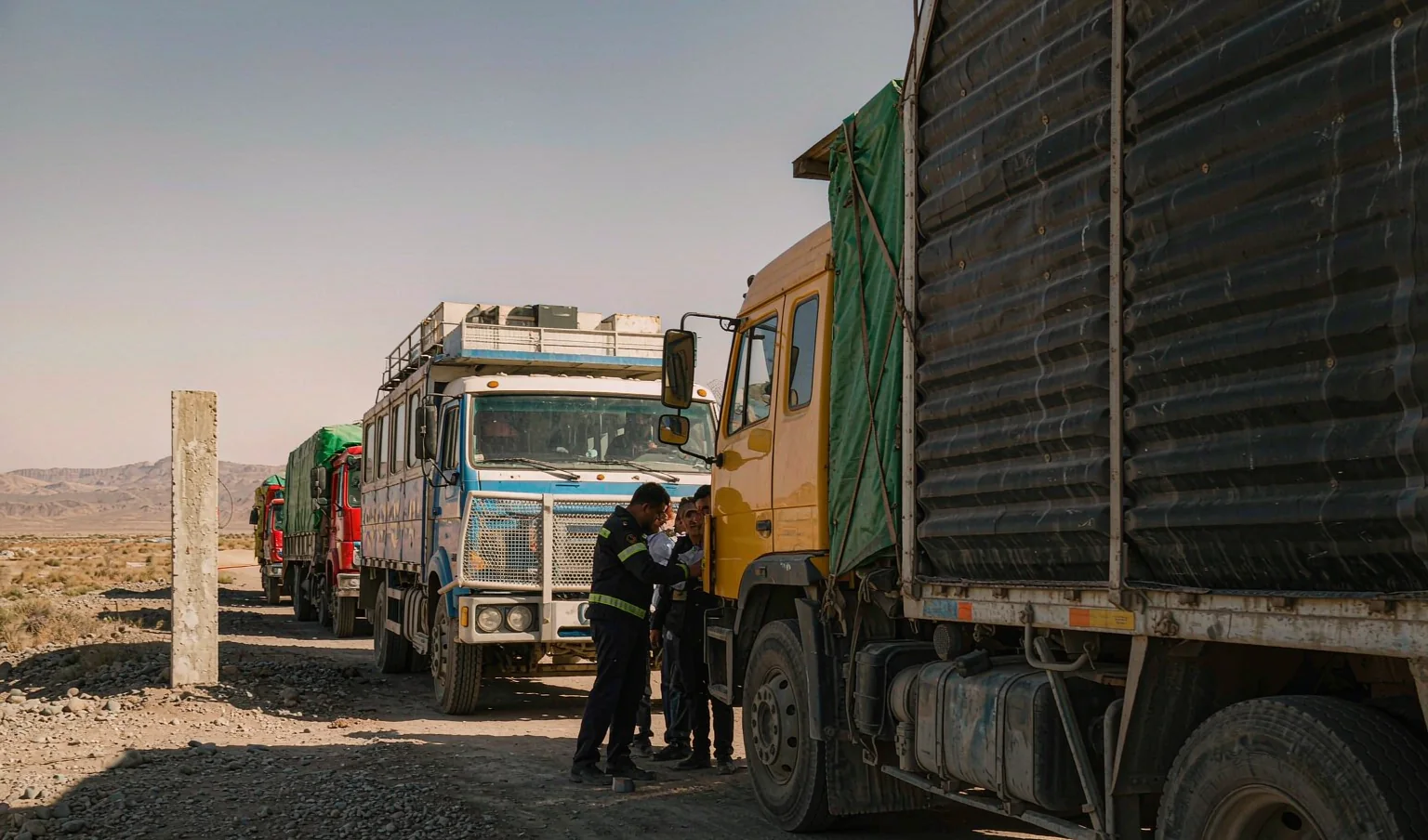
Those ranges assume complete documents before departure and no weather or maintenance closures. Two variables move them most: days spent waiting at Farap or at the Kazakh-Uzbek border, and how quickly the declaration is accepted. Both are manageable with preparation, not without it. Transit times and all-in costs change month to month, so contact us for a quotation rather than planning off published ranges.
Customs: The Permit Is the Gate
Turkmen import procedure is stricter than its neighbours’ and the first item is not the invoice but authorisation. Import permits are issued through the relevant government agency, and medical devices, pharmaceuticals, chemicals and agricultural goods need sector-specific approval. An end-user certificate stating who will use the goods and why is commonly required alongside, and it is read rather than filed when the buyer is a state enterprise or the cargo belongs to a named project.
- Contract registration. Many trades require the contract to be registered with the state commodity exchange before shipment, normally handled by the buyer – so raise it in week one, not week five.
- Conformity certification. A certificate from Turkmenstandartlary may be required depending on the HS code. Apply before arrival; certification at the border means dwell time and storage charges.
- Declaration by a licensed broker. The entry is filed electronically with supporting documents uploaded, and the data must match the paper file exactly. Any inconsistency sends it to manual review.
- Language. Documents need notarised translation into Russian or Turkmen. Translate technical terms against the HS description – one mistranslated term can trigger reclassification or a challenge to value.
- Duty and VAT. Duty follows the HS code, commonly quoted in a band of zero to fifteen percent with higher rates possible on specific codes. VAT is 15 percent on customs value plus duty, and excise applies to alcohol and tobacco.
- Payment. Duties and taxes are paid in manat, or convertible currency where allowed, at a bank designated by customs, and proof of payment is a release condition. Foreign currency is rationed, so fix the payment route before the cargo lands.
- Wood packaging. Pallets and crates need IPPC marking and, where applicable, a phytosanitary certificate. Turkmen inspectors check.
DDP or DAP for Turkmenistan
DDP is available but it is not a switch you flip: the seller needs a local entity or partner acting as importer of record and settling taxes in manat. Two points to settle first – who can reclaim the 15 percent VAT, since a non-resident buyer usually cannot, and how FX allocation works locally. Where the buyer already holds an import permit and a licensed broker, DAP with buyer-cleared import is often cleaner. We quote both so you compare landed cost.
Turkmenistan as a Transit Country
Three exits matter. To Iran, rail runs via Sarakhs and Artyk, where the gauge changes to the Iranian network. To Afghanistan, cargo crosses at Serhetabat toward Torghundi, and via Imamnazar toward Aqina. To the South Caucasus, the Turkmenbashi-Alat ferry connects to the Middle Corridor. Transit cargo needs its own guarantee, and the eTIR interconnection is what makes the road versions practical.
Practical Advice Before You Book
- Start the permit, not the packing list: check whether your HS code is controlled and get the permit and end-user certificate moving before the order is confirmed.
- Match every field across invoice, packing list, contract and declaration. This one discipline prevents most inspection delays.
- Decide DDP or DAP in writing – importer of record, VAT, FX allocation – before booking, and budget dwell rather than freight alone.
- Treat out-of-gauge machinery as project cargo, with a route survey, lifting plan and permits.
How CargoSolid Helps
CargoSolid arranges rail and TIR trucking from China to Turkmenistan, sea-Caspian options for heavy cargo, and door-to-door DDP delivery through partners who act as importer of record. We check the permit position on your HS code before quoting and give one price covering export clearance, main carriage, customs, duty and final delivery. Send your cargo details and delivery date for a routing comparison. Contact cargosolid@outlook.com or WhatsApp +86 186 7539 5280.
Frequently Asked Questions
Can I ship door-to-door DDP from China to Turkmenistan?
Yes. We deliver DDP to Ashgabat, Turkmenabat and Turkmenbashi using a local partner as importer of record, covering export clearance, main carriage, customs, duty, the 15 percent VAT and final delivery. Where the buyer already holds an import permit, DAP with buyer-cleared import is often cheaper.
How long does rail freight take from China to Ashgabat?
About 20 to 28 days door-to-door, including the gauge transfer at the China-Kazakhstan border and customs clearance. Trucks run about 14 to 20 days and sea plus Caspian ferry about 35 to 45 days. Ask us for a current transit estimate on your routing.
What documents does Turkmenistan customs require?
An import permit, an end-user certificate, the commercial contract (often registered with the state commodity exchange), invoice, packing list, bill of lading or rail waybill, certificate of origin, insurance certificate, a Turkmenstandartlary conformity certificate where required, and an electronic declaration filed by a licensed broker.
What taxes apply on imports into Turkmenistan?
Duty by HS code, commonly quoted at zero to fifteen percent with higher rates on specific codes, plus VAT at 15 percent on customs value plus duty. Excise applies to alcohol and tobacco. Duties and taxes are paid in manat at a bank designated by customs.
Is Turkmenistan a useful transit route to Iran or Afghanistan?
Yes. Corridors link Turkmenistan with Iran via Sarakhs and Artyk, and with Afghanistan via Serhetabat toward Torghundi and via Imamnazar toward Aqina. Transit moves under its own customs guarantee, and eTIR has made the road versions far more practical.
Do I need an import permit and an end-user certificate?
In most cases, yes. Permits come from the relevant government agency, and medical devices, pharmaceuticals, chemicals and agricultural goods also need sector authorisation. An end-user certificate stating who will use the goods and for what purpose is commonly required, particularly for equipment and project cargo.
Related Materials
- Shipping from China to Turkmenistan 2026: Transit Routes & Costs
- eTIR Goes Paperless Across the Caspian: What It Means for TIR Trucking
- China to Iran Land Freight Transit Time Oct 2026: Real Data
- Middle Corridor Update: BTK at Full Capacity, EU Funding
- Shipping from China to Turkmenistan | Uzbekistan | Land & Rail Freight Services
- DDP Shipping from China | FAQ | Contact Us
Get in Touch
Tell us what you are shipping and where it is headed. Our team usually replies within one business day with a tailored quote.