











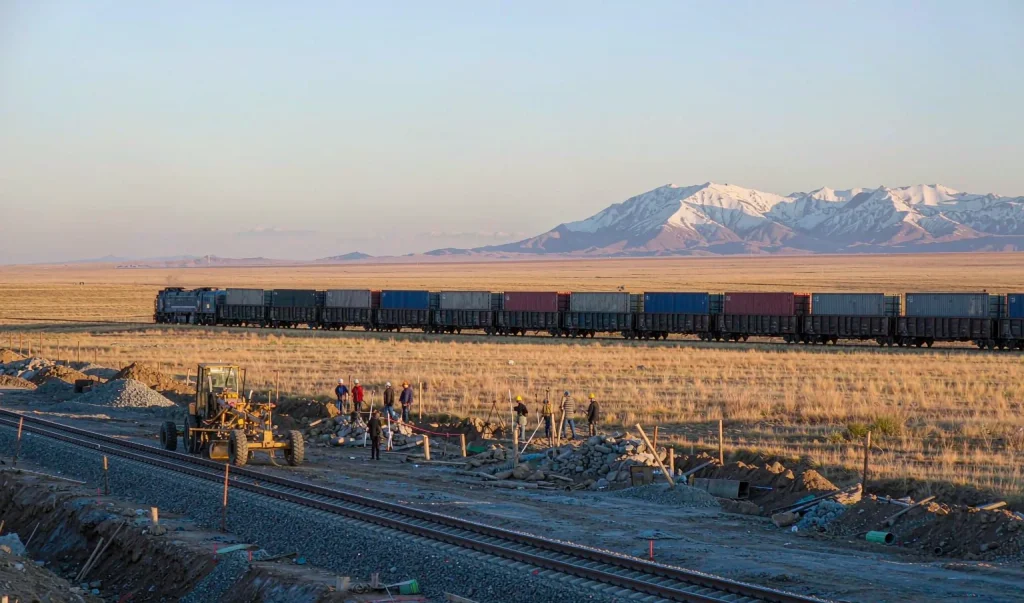
Kazakhstan is months away from opening a third railway border crossing with China, and the construction numbers released this month show it is no longer a paper project. Earthworks on the Bakhty-Ayagoz line are 92 percent complete, about 70 kilometres of track are due to be laid by the end of 2026, and the line is scheduled to open in 2027 with a design capacity of 20 million tonnes a year. For a corridor that already carries the bulk of China-Europe land cargo, a third crossing matters in one specific way: it adds slack to border points that have been running at their limits. Here is what is being built, why it matters, and what shippers can do before and after it opens.
What Is Being Built
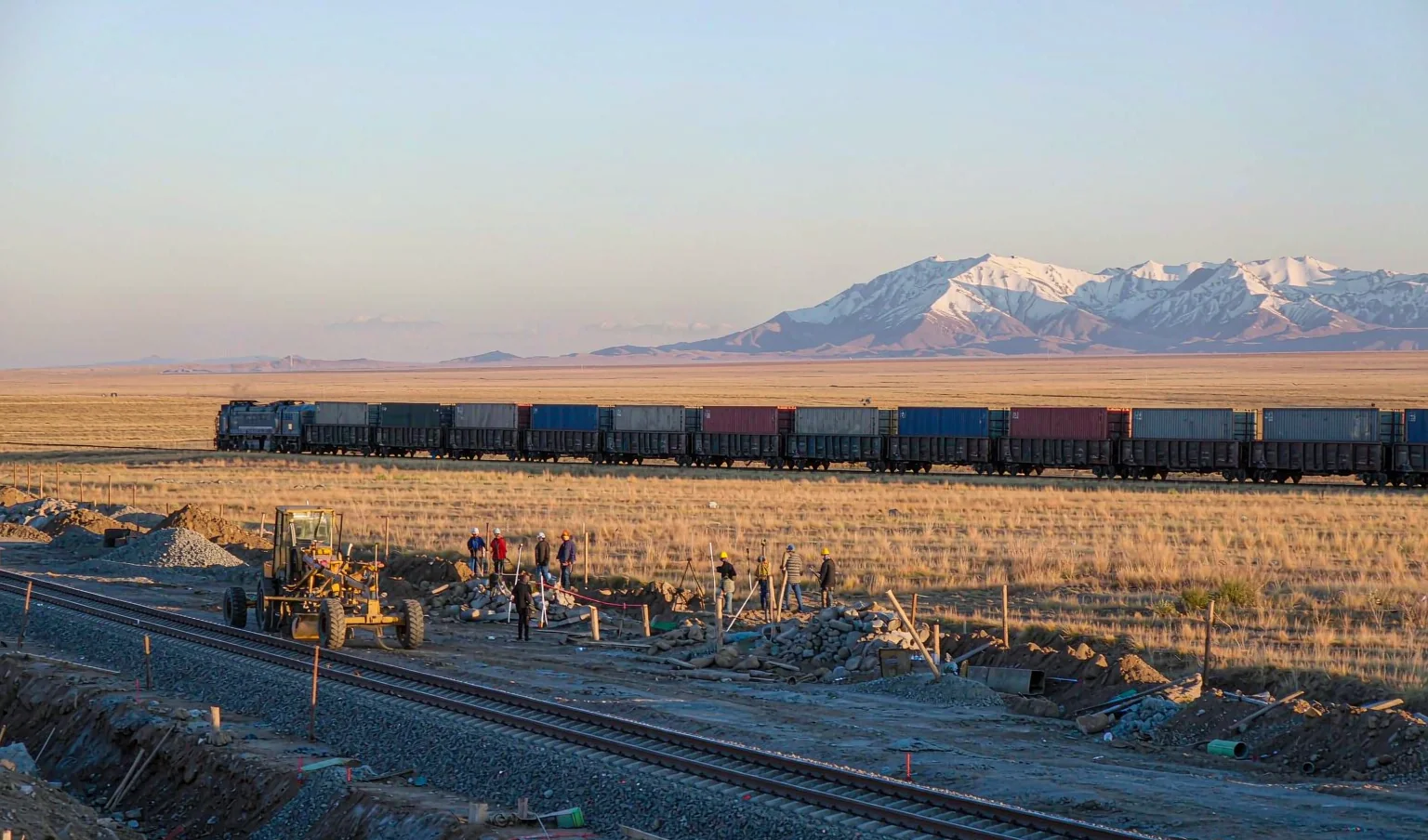
The new line runs 303 kilometres across eastern Kazakhstan, from the border settlement of Bakhty – opposite Tacheng in northern Xinjiang – to Ayagoz, a junction on the line that feeds central Kazakhstan and the national network. It will become the third rail gateway between the two countries, alongside Alashankou-Dostyk and Khorgos-Altynkol.
Progress reports from Kazakhstan’s transport ministry in November 2026 put the project firmly on schedule:
- earthworks finished across 92 percent of the route;
- around 870 items of heavy machinery and 1,450 workers deployed on site;
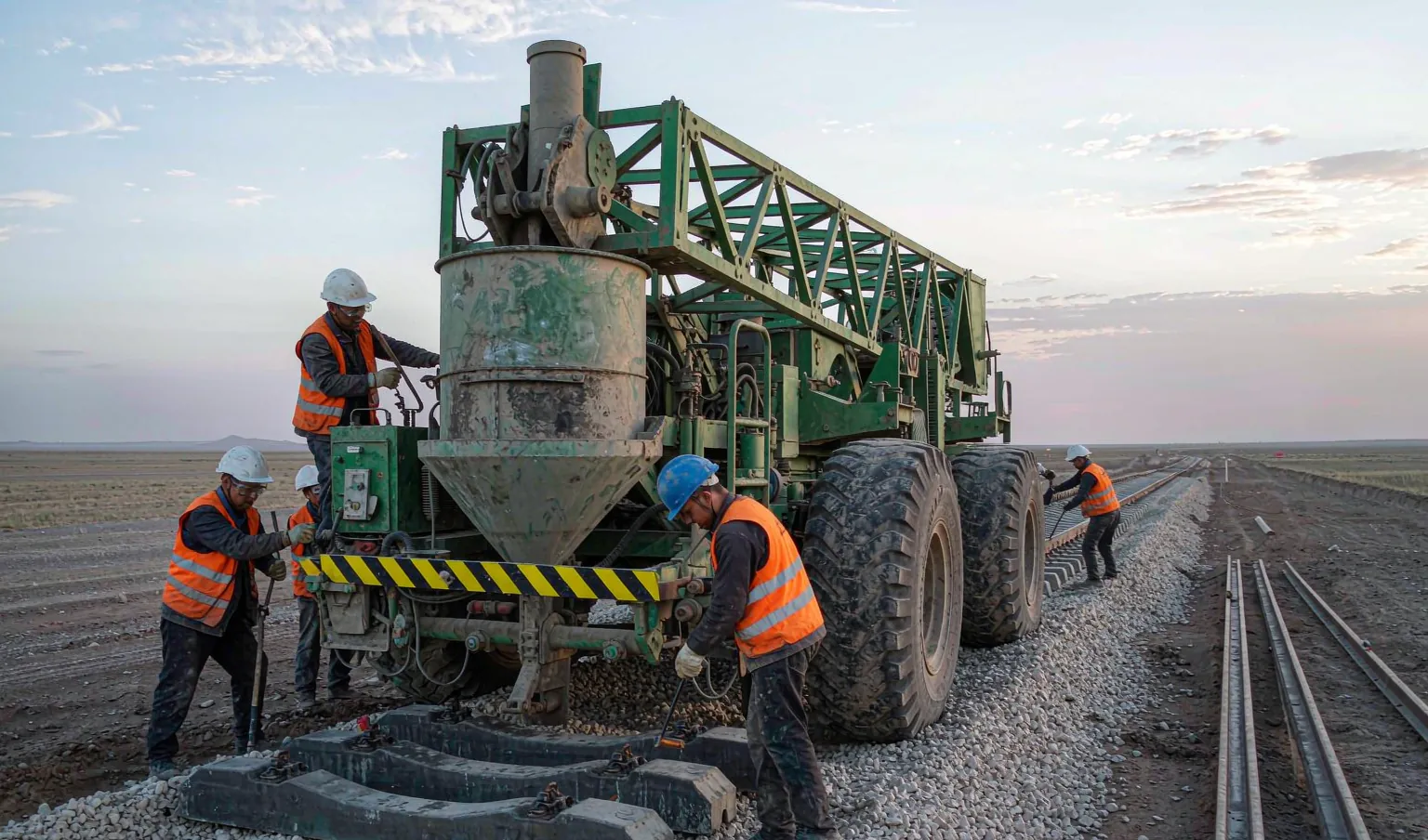
- bridges, culverts and track superstructure continuing in parallel;
- a target of 70 kilometres of sleeper track laid by the end of 2026;
- completion and commissioning planned for 2027.
On the Chinese side, Tacheng’s Baktu crossing is being built out in step, with new rail sidings and cross-border industrial and logistics zones – the so-called two countries, two parks projects – extending the corridor’s value beyond simple transit.
Why a Third Crossing Matters
The answer lies in how hard the existing two crossings are already working. Bilateral China-Kazakhstan rail freight reached 35.6 million tonnes in 2025, up 11 percent year on year. Of that, the Alashankou-Dostyk gateway handled about 17.9 million tonnes and Khorgos-Altynkol about 14.2 million tonnes. Both are running at high utilisation, and both are gauge-change points where wagons transfer between Chinese standard gauge and the 1,520 mm broad gauge – the step that produces the border-yard queues documented throughout this year.
The new line is designed for up to 20 million tonnes a year. Chinese forecasts cited in the project reporting expect combined bilateral rail capacity to rise from around 28 million to 48 million tonnes once it opens, with transport distances on some flows shortened by more than a thousand kilometres, because Tacheng sits considerably further north and west than the existing gateways – a shorter hop to western Kazakhstan, the Caspian ports and onward Trans-Caspian routings.
The relief effect is already visible in the trade data. In the first ten months of 2026, the two existing rail crossings passed more than 15,000 China-Europe and China-Central Asia trains, up 5.6 percent, moving 30.6 million tonnes of cross-border freight, up 7.9 percent – and that is the traffic a third gateway will be sharing from 2027.
The Bigger Kazakhstan Build-Out
The Bakhty-Ayagoz line is one piece of a wider program that Kazakhstan’s President set out in his address to the nation this year. Alongside the third crossing, which he said will add 20 million tonnes of capacity toward China, work began in August on the Aral-Caspian mainline, a project expected to shorten the Trans-Caspian international corridor by about a thousand kilometres and cut delivery times along it to around three days. Kazakhstan also plans 475 kilometres of new railway lines this year and the modernisation of 2,900 kilometres of existing track.
The context is strategic as much as commercial: by Kazakhstan’s own estimate, roughly 85 percent of overland cargo moving from China toward Europe transits its territory, and the country’s leadership wants to convert that geography into durable logistics revenue – consolidation hubs, distribution centres and processing zones around the corridors rather than bare transit.
Even niche trades are riding the same rails: Kazakhstan’s rail grain deliveries to China jumped 65 percent year on year in the first ten months of 2026, to 935,000 tonnes, a reminder that the corridor’s growth is broad-based, not just container transit.
What Changes for Cargo – Now and in 2027
As with any border infrastructure, honesty helps: for cargo moving today, the third crossing changes nothing operationally. Current routings to Kazakhstan remain exactly what they were last quarter:
- Rail via Alashankou/Dostyk or Khorgos – the workhorse routes, best booked two to three weeks ahead, with pre-arrival documentation rewarded by the faster clearance systems at both yards. Our October border-queues report covers the current picture.
- TIR trucking – full truckloads crossing at Khorgos, Dostyk and northern Xinjiang checkpoints, often the fastest door-to-door option for time-sensitive freight, with the eTIR digital transition steadily stripping paperwork out of the process.
- Air freight from Chinese hubs into Almaty and Astana for high-value, deadline-critical cargo.
What changes from 2027 is capacity headroom. A third gateway spreading the load means shorter dwell at the gauge-change yards, more resilient schedules when one crossing is congested or closed by weather, and genuine routing redundancy for flows into Kazakhstan itself and via the Caspian corridor onward to the South Caucasus and Europe. For shippers with regular volumes, the practical move is to watch the opening schedule and pre-qualify the new routing with your forwarder so you can shift part of your flow the moment it is commercially available.
What Shippers Should Do Now
- Book rail early. The existing crossings reward preparation: two to three weeks of lead time and complete pre-arrival documents are the difference between a queue and a smooth transit.
- Use trucking where it wins. For door-to-door speed on central and northern Kazakhstan, TIR trucking remains the fastest option today and does not depend on rail-slot availability.
- Decide DDP or DAP before booking. Who registers the import and pays Kazakh duties and VAT changes paperwork and landed cost. We handle both, including acting as importer of record for buyers without a local entity.
- Plan 2027 volumes around the opening. If your flows touch western Kazakhstan, the Caspian ports or Trans-Caspian onward legs, the Tacheng routing may shorten them materially – get it priced into next year’s logistics budget now.
- Verify corridor claims against current data. Government transit-time projections on Central Asian corridors keep improving, but border yards and Caspian sailings still produce queue weeks – confirm the live picture before committing delivery deadlines.
How CargoSolid Helps
CargoSolid runs rail and TIR trucking programs from China to Kazakhstan, Uzbekistan, Kyrgyzstan and the wider region, with land and rail freight services and door-to-door DDP options covering customs, duties and final delivery under one fixed price. Whether you are routing through the existing crossings today or preparing for the third gateway in 2027, send us your cargo details and deadlines and we will compare rail, road and mixed routings side by side. Contact cargosolid@outlook.com or WhatsApp +86 186 7539 5280.
Frequently Asked Questions
What is the Bakhty-Ayagoz railway?
A 303-kilometre railway across eastern Kazakhstan running from Bakhty on the Chinese border – opposite Tacheng in northern Xinjiang – to Ayagoz on the national network. Once open it will be the third rail border crossing between China and Kazakhstan, alongside Alashankou-Dostyk and Khorgos-Altynkol.
When will the third China-Kazakhstan rail crossing open?
Construction is planned for completion and commissioning in 2027. As of November 2026, earthworks were 92 percent complete, with around 70 kilometres of track due to be laid by the end of 2026.
How much freight capacity will the new line add?
The line is designed for up to 20 million tonnes a year. Project reporting cites Chinese forecasts that combined bilateral rail capacity will rise from about 28 million to 48 million tonnes once it opens, with some transport distances shortened by more than a thousand kilometres.
Will the new crossing reduce congestion at Dostyk and Altynkol?
That is its main purpose. The two existing crossings handled 17.9 and 14.2 million tonnes respectively in 2025 and passed over 15,000 China-Europe and Central Asia trains in the first ten months of 2026, and both involve gauge-change yards where queues form. A third gateway spreads that load.
How can I ship cargo from China to Kazakhstan today?
Rail via Alashankou/Dostyk or Khorgos remains the volume workhorse, TIR trucking is usually the fastest door-to-door option, and air freight serves Almaty and Astana for urgent cargo. All are available now; the new crossing is a 2027 capacity addition.
Is DDP shipping available to Kazakhstan?
Yes. CargoSolid can act as importer of record through its regional partners, covering export clearance in China, the main carriage, Kazakh customs, duties and taxes, and final delivery for one fixed price. Contact us for a quotation.
Related Materials
- Shipping from China to Kazakhstan 2026: Rail, Truck & Air Freight Guide
- China-Europe Rail October 2026: Border Queues and Faster Corridors
- Middle Corridor Update: BTK at Full Capacity, EU Funding
- eTIR Goes Paperless Across the Caspian
- Shipping from China to Kazakhstan | Uzbekistan | Land & Rail Freight Services
- DDP Shipping from China | FAQ | Contact Us
Get in Touch
Tell us what you are shipping and where it is headed. Our team usually replies within one business day with a tailored quote.