












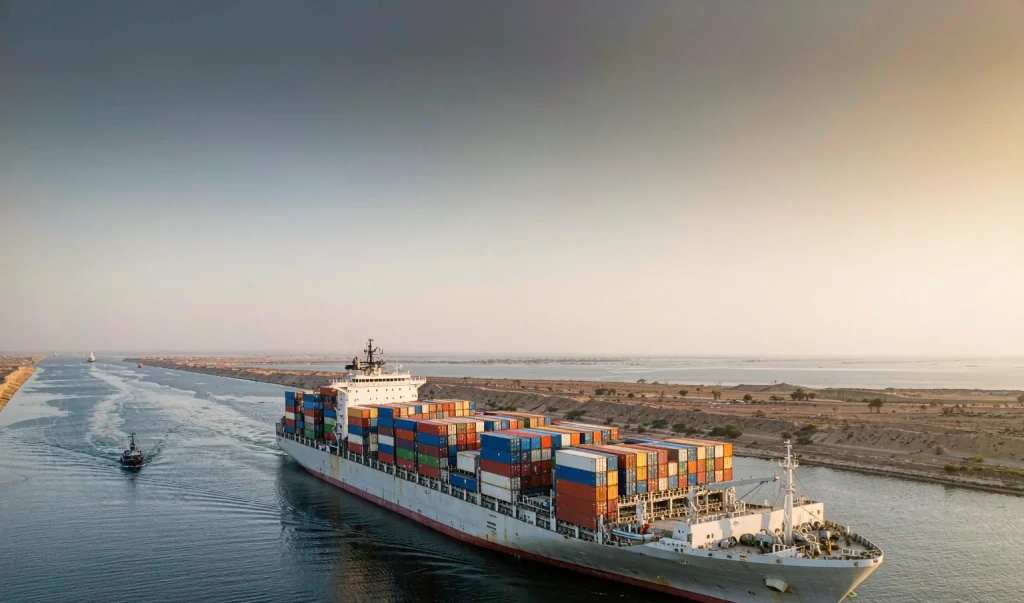
The Red Sea detour that has reshaped global container shipping since late 2023 is finally unwinding – not with one announcement, but with a wave of them. In the space of a few weeks, the last major alliance holdout scheduled its return, Evergreen’s mega-ships passed through the Suez Canal for the first time in nearly three years, and independent analysts put returning Asia-Europe capacity at roughly 63 percent. For importers, the question is no longer whether the Suez route comes back, but what the transition does to transit times, rates and bookings over the next two quarters. Here is where things stand in mid-November 2026, and how to plan around it.
The Last Holdout Joins: Premier Alliance Sails Suez
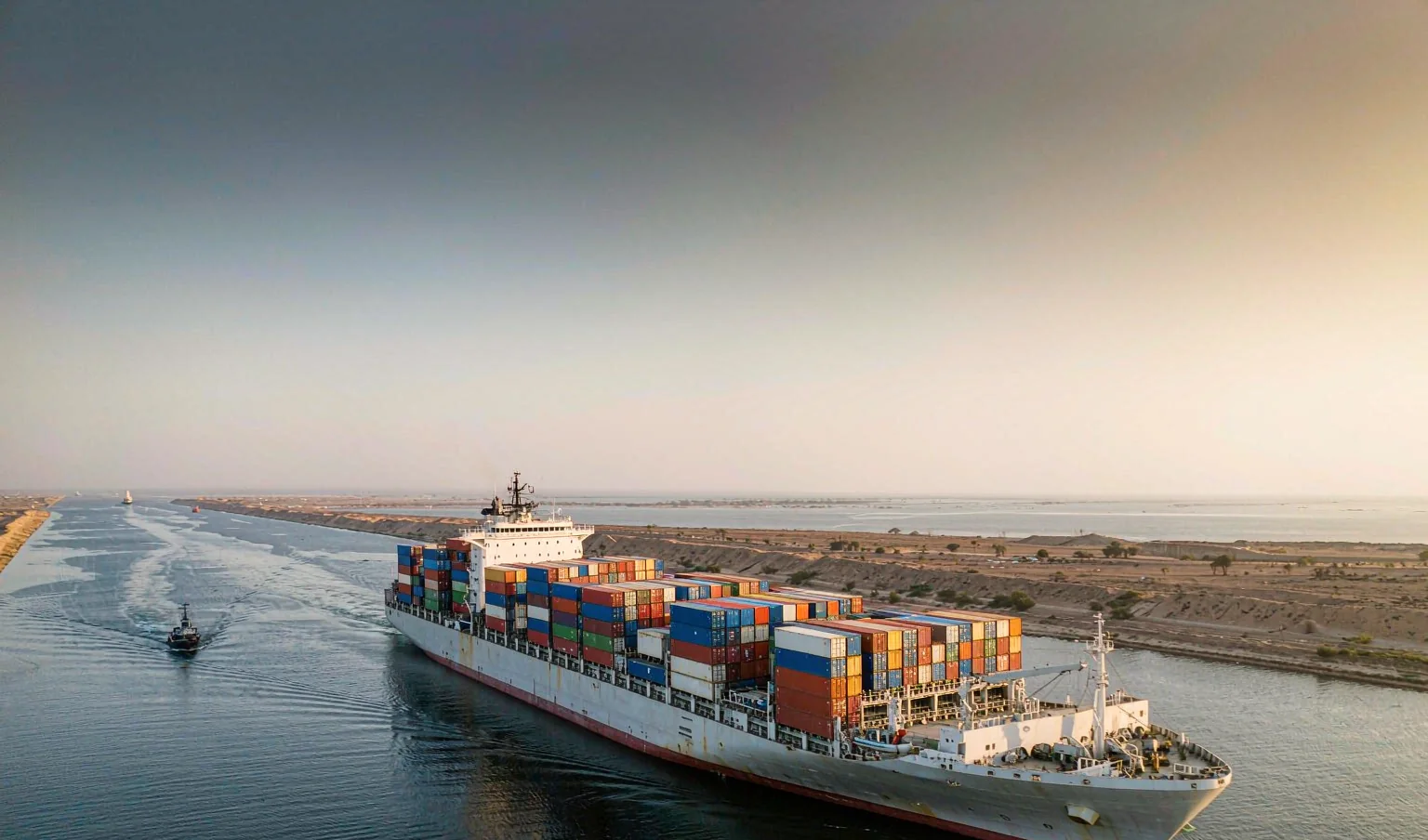
On 22 October, ONE issued a customer advisory confirming that the Premier Alliance would resume routing its MD1 and MS2 Asia-Mediterranean services through the Red Sea and Suez Canal. The MD1 westbound first sailing was taken by the YM TRUST, loaded at Ningbo on 10 November and expected at Damietta around 7 December; the MS2 followed with ONE SYNERGY, loaded at Qingdao on 16 November for Piraeus around 28 December. Yangming, the alliance partner managing the schedule, said a vessel would leave Asia on 11 November and reach the Gulf of Aden by 28 November, with more loops to follow in December.
By year-end the alliance expects one North Europe and two Mediterranean services on the Red Sea routing, roughly 30 to 40 percent of its Europe-bound capacity. With that move, all four global shipping networks – Gemini, Ocean Alliance, MSC and Premier Alliance – have vessels back on the Suez route for the first time since the Red Sea crisis began.
Evergreen Crosses the Line
The most symbolic moment came in early November, when the Suez Canal Authority confirmed that Evergreen’s EVER EON – a 16,556 TEU vessel, 369 metres long – had transited the canal westbound on its Asia-North Europe loop, the line’s first Suez passage in nearly three years. Two more transits were already scheduled: the EVER EDIT eastbound on 12 November on the NEU7/CES service linking North China with the UK and the Continent, and the 20,124 TEU EVER GIFTED on a Mediterranean return voyage around 17 November.
Evergreen also announced the restart of a dedicated China-Red Sea service from 12 November, with the EVER SUPERB sailing from Qingdao through Shanghai, Ningbo and Shekou to Singapore, Jeddah, Sokhna and Aqaba. That leaves ZIM as the only top-ten carrier still keeping its main services on the Cape of Good Hope routing.
The Capacity Math: 63 Percent and Climbing
How much has actually returned? Three independent measurements tell a consistent story:
- Alphaliner, tracking the 46 direct Far East-Europe services run by the ten largest carriers between 15 September and 15 October, observed 24 services already transiting the Red Sea – about 5.5 million TEU of the 8.7 million TEU deployed on the trade, or 63 percent. Mediterranean services were further along (about 70 percent) than North Europe loops (about 58 percent).
- BIMCO, citing Clarksons data, put weekly container capacity through the canal at roughly 753,000 TEU in the first half of October – more than half the volume of the same period in 2023, before the detours began.
- The canal itself counted 281 container-ship transits carrying around 3 million TEU since October began, and 53 transits in the first week of November – up 130 percent year on year.
The Gemini alliance added its own momentum: on 2 November Maersk switched its ME1 Asia-Med loop from the Cape back to Suez, bringing the number of Gemini services on the canal to six. Maersk’s chief operating officer has said the carrier expects all of its services to return through Suez by March 2027. Drewry’s forecast is similar in direction – canal transits back to around 80 percent of normal by February 2027, with the Red Sea return releasing about 1.6 million TEU of effective capacity back into the global fleet during 2027.
Why Carriers Came Back Faster Than Predicted
For two years the industry assumed the Cape routing would persist as long as any security risk remained. Three forces pushed the timetable forward anyway:
- The Cape detour costs about two weeks per round trip, which means a Suez service needs fewer vessels to maintain the same weekly frequency. Every ship parked on the long way round is a ship earning nothing extra.
- Fuel economics flipped. Singapore low-sulphur bunker prices are up roughly 97 percent year on year, making the extra 3,000-plus nautical miles increasingly painful to absorb.
- Competitive pressure. Drewry’s analysts have described carriers as competitive prisoners: the first movers get to offer shorter transit times at similar rates, and everyone else faces cargo migrating to them. Once Gemini and the Ocean Alliance moved, the rest had little choice.
Rates: The Tug-of-War Has Started
Textbook economics says returning capacity should push rates down, and the derivatives market already believes it – Europe-Med container futures fell more than 8 percent in early November. But the spot market has not followed yet: the Shanghai Containerized Freight Index stood at 3,687.35 in early November, its fourth consecutive weekly rise, and several carriers pushed through November FAK increases at the same time as they announced Suez returns.
The explanation is timing. Spot rates price today’s frictions – still-elevated demand ahead of the Lunar New Year, port congestion, and vessels not yet repositioned – while futures price the capacity that the Suez return will release. Expect the two to converge over the coming weeks: gradual softening on Europe and Mediterranean spot rates as sailings normalize, not a cliff. One caution in the meantime: September global schedule reliability was just 50.6 percent according to Sea-Intelligence, with late vessels averaging 6.65 days behind – the network is still wobbling while it reorganizes itself.
What Shippers Should Do Now
- Re-confirm booked routings before locking delivery dates. Schedules on Asia-Europe and Asia-Med services will be revised repeatedly over the next three months as loops switch back. Always ask which routing a specific voyage is taking.
- Recalculate your transit buffers. Where a service is confirmed via Suez, Mediterranean and Red Sea destinations gain roughly two weeks versus the Cape – buffer that no longer needs to sit in your planning.
- Keep contract and spot negotiations separate. With rates in flux, mixing the two negotiations hands the advantage to the counterparty. Fix annual volumes on contract, and let genuine spot cargo ride the softening market.
- Look again at Red Sea gateway ports. The restored China-Red Sea direct calls at Jeddah, Sokhna and Aqaba materially improve options for Middle East cargo, including transshipment into the Gulf and beyond.
- Fix Incoterms and destination costs early. Under DDP terms the duties, clearance and final delivery sit with us at a fixed price, so a volatile ocean leg does not turn into surprise charges at the door.
- Remember the land alternatives. For Central Asia and Russia-bound cargo, rail and TIR trucking corridors do not depend on the Red Sea at all, and they remained stable through the entire crisis.
How CargoSolid Helps
CargoSolid arranges ocean freight from all major Chinese ports to Europe, the Mediterranean, the Middle East and beyond, alongside rail and TIR trucking programs across Eurasia. We track which services have genuinely returned to Suez – not just which have announced it – and quote transit times and all-in landed costs accordingly, with DDP options that fix duty, clearance and delivery under one price. If you are rebooking Asia-Europe cargo this quarter, send us the details and deadlines and we will compare routings side by side. Contact cargosolid@outlook.com or WhatsApp +86 186 7539 5280.
Frequently Asked Questions
Are container ships sailing through the Suez Canal again?
Yes, and increasingly so. All four major shipping networks – Gemini, Ocean Alliance, MSC and Premier Alliance – now have vessels transiting Suez again, and Evergreen resumed canal transits in early November 2026 after nearly three years. ZIM remains the last top-ten carrier on the Cape routing.
How much Asia-Europe capacity has returned to the Red Sea?
Alphaliner measured about 63 percent of deployed Far East-Europe capacity via the Red Sea in the period to mid-October 2026, with Mediterranean services around 70 percent and North Europe around 58 percent. BIMCO reported weekly Suez container capacity above half of pre-crisis levels.
Will freight rates fall now that Suez is reopening?
Gradually, not immediately. Carriers raised November FAK rates even as they announced returns, because spot rates still price current frictions. Futures markets have already priced in lower rates, and analysts expect spot softening on Europe-Med lanes as the returning capacity is absorbed over the coming weeks.
When will Asia-Europe shipping return to normal?
Drewry expects Suez transits at about 80 percent of normal by February 2027, with roughly 1.6 million TEU of effective capacity released during 2027. Maersk has said it expects all of its services back through the canal by March 2027, subject to security conditions.
How does the Suez return change transit times from China?
Routing via Suez instead of the Cape of Good Hope saves roughly two weeks on Asia-Europe round trips. Mediterranean and Red Sea destinations benefit first, which shortens door-to-door lead times for importers on those lanes once a confirmed Suez sailing is booked.
Is the Red Sea safe for cargo now?
Carriers return service by service after their own security assessments, and they continue to monitor conditions with the option to reroute. War-risk premiums and surcharges have not disappeared, so it remains worth reviewing insurance terms and all-in costs on each booking.
Related Materials
- Suez Returns, Golden Week Blanks: A Q4 2026 Shipping Outlook
- War-Risk Cover and Surcharges: A Q4 2026 Risk Playbook
- Container Freight Rates Keep Climbing: A Guide for China Shippers
- Panama Canal Limits Return as El Nino Bites: A Shipper Guide
- DDP Shipping from China: When It Pays Off | FAQ | Contact Us
Get in Touch
Tell us what you are shipping and where it is headed. Our team usually replies within one business day with a tailored quote.